


In cardiac surgery, patient outcomes are never the work of one surgeon alone.
They are the result of a highly coordinated team—surgeons, anesthesiologists, advanced practice providers, nurses, and many others—working seamlessly together at every stage of care.
At the Florence Wormald Heart & Vascular Institute at St. Elizabeth, cardiac surgery is led by a starting five of nationally recognized surgeons advancing minimally invasive and complex heart surgery across the region:
Together, they deliver the full spectrum of cardiac surgery, from robotic-assisted procedures to totally endoscopic valve repair, supported by multidisciplinary teams and nationally benchmarked outcomes.
As a Comprehensive Cardiac Center certified by The Joint Commission and the American Heart Association, St. Elizabeth Healthcare continues to advance minimally invasive approaches that allow for:
Because the future of heart care isn’t built by one person; it’s built by teams.
Learn more about the cardiac surgery team at St. Elizabeth Healthcare: stelizabeth.com/medical-services/heart-vascular/heart-surgery/
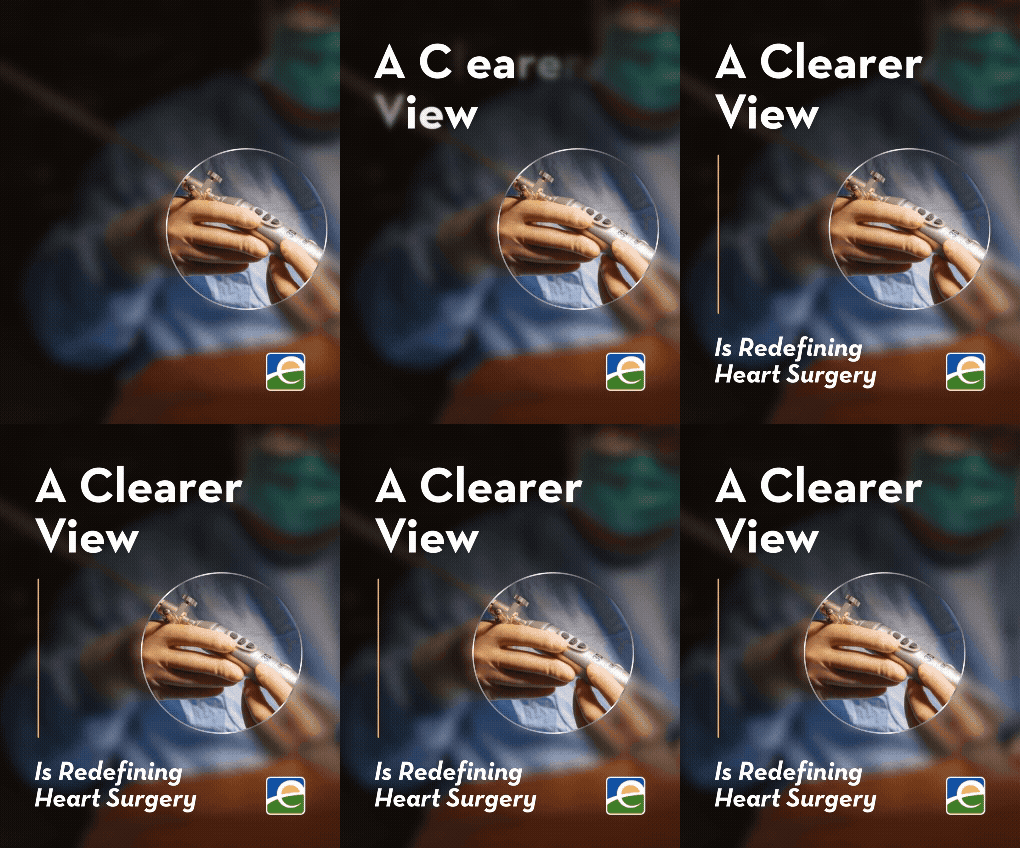
A clearer view is redefining heart surgery.
The Florence Wormald Heart & Vascular Institute at St. Elizabeth is among the earliest cardiac centers in the nation to implement advanced 3D 4K endoscopic technology for heart surgery.
Introduced by our cardiac surgery team, the platform provides 5x magnification and immersive 3D visualization, allowing surgeons to perform complex procedures through significantly smaller incisions.
“With traditional techniques, larger incisions were often necessary to achieve clear visualization,” says Dr. Mario Castillo-Sang, Surgical Director of Mitral Valve and Heart Failure Therapies at the Florence Wormald Heart & Vascular Institute at St. Elizabeth. “With 3D 4K endoscopy, we can operate through much smaller incisions while maintaining superior visibility. This means less pain and faster recovery, even for elderly patients.”
While still classified as open-heart surgery, totally endoscopic procedures are performed through incisions as small as 2.5 centimeters, without cutting the breastbone or spreading the ribs.
“The technology allows us to perform intricate operations with greater precision and efficiency,” Dr. Castillo-Sang adds.
Explore how 3D endoscopic innovation is reshaping heart surgery:
stelizabeth.com/a-clearer-view-st-elizabeth-pioneers-3d-endoscopic-cardiac-surgery

Construction is underway on four new cardiac operating rooms designed for robotic and totally endoscopic heart surgery, built to support the next era of minimally invasive cardiac care.
These state-of-the-art surgical suites will integrate advanced imaging, robotic technology and endoscopic platforms, allowing surgeons to perform complex cardiac procedures through smaller incisions while maintaining exceptional visualization and precision.
For a program committed to growth and surgical innovation, this investment represents the next step in expanding minimally invasive cardiac surgery leadership across the region.
Over the coming months, I will share updates, behind-the-scenes progress and videos as this vision moves from blueprint to breakthrough.
Stay tuned.
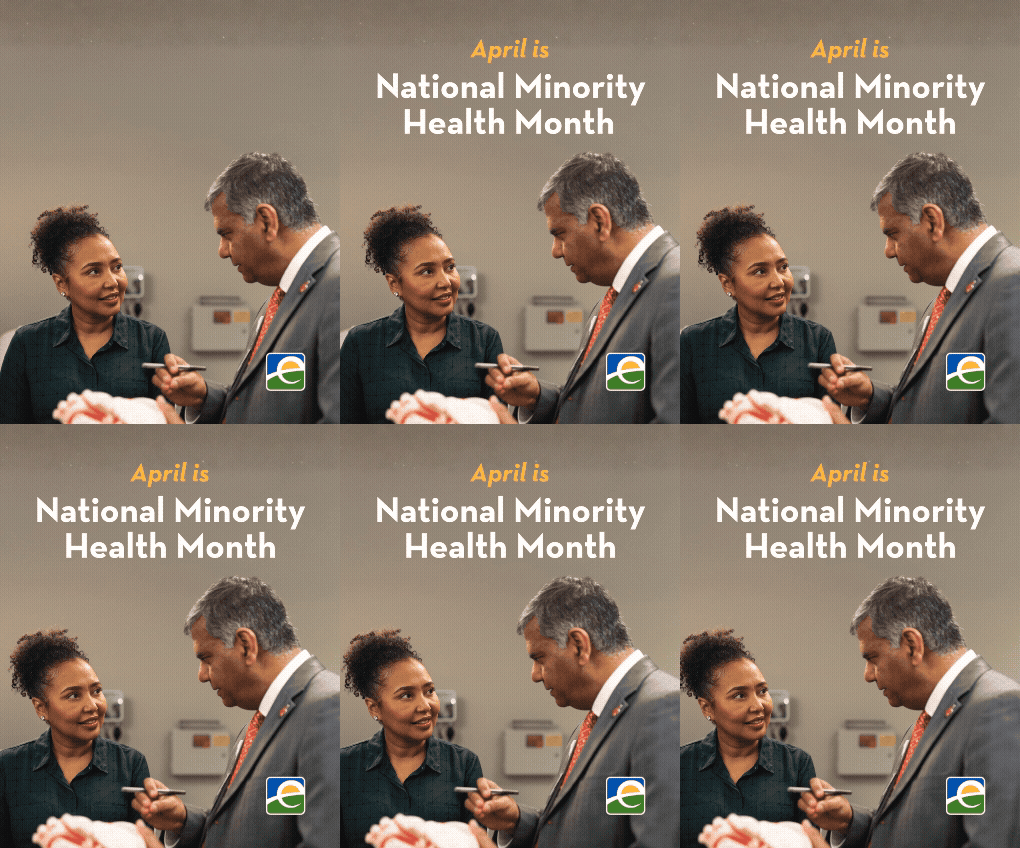
Cardiovascular disease remains the leading cause of death in the United States, but its burden is not experienced equally.
Black Americans experience higher rates of hypertension, earlier onset of heart disease and higher cardiovascular mortality compared with other populations. Similar disparities exist across many communities, including Hispanic, Native American, Asian American and Pacific Islander populations, where access to preventive care, socioeconomic factors and underlying health conditions can influence cardiovascular risk.
Conditions such as high blood pressure, diabetes, obesity and high cholesterol occur more frequently in several minority populations, increasing the risk for coronary artery disease and other serious heart conditions.
At the Florence Wormald Heart & Vascular Institute at St. Elizabeth, we believe improving cardiovascular outcomes begins with awareness, early detection and access to expert care.
Preventive screenings, risk factor management and timely referral to cardiovascular specialists can make a lifesaving difference for all communities.
To access more heart health resources visit: stelizabeth.com/medical-services/heart-vascular/heart-surgery/

At the Florence Wormald Heart & Vascular Institute at St. Elizabeth, minimally invasive cardiac surgery is transforming patient care and educating how the next generation of surgeons learn.
Our 3D endoscopic cardiac surgery program treats a full range of structural heart conditions, including aortic, mitral and tricuspid valve disease, atrial fibrillation, atrial septal defects and cardiac tumors, using minimally invasive endoscopic techniques.
This approach changes the entire patient experience. Many patients are extubated in the operating room, stay an average of three days in the hospital, rarely require transfusions (fewer than 8% of cases) and return to work within three to four weeks, all while maintaining STS three-star quality outcomes.
Surgeons around the world are traveling to Edgewood to learn these techniques. Over the past four years, more than 300 surgeons across the globe have visited to observe advanced mitral repair and endoscopic cardiac surgery.
Training continues to expand with the addition of our new Archetype simulator, complementing the only 3D 4K endoscopic cardiac surgery simulator in Kentucky or Ohio and strengthening St. Elizabeth Healthcare as a hub for endoscopic cardiac surgery education.
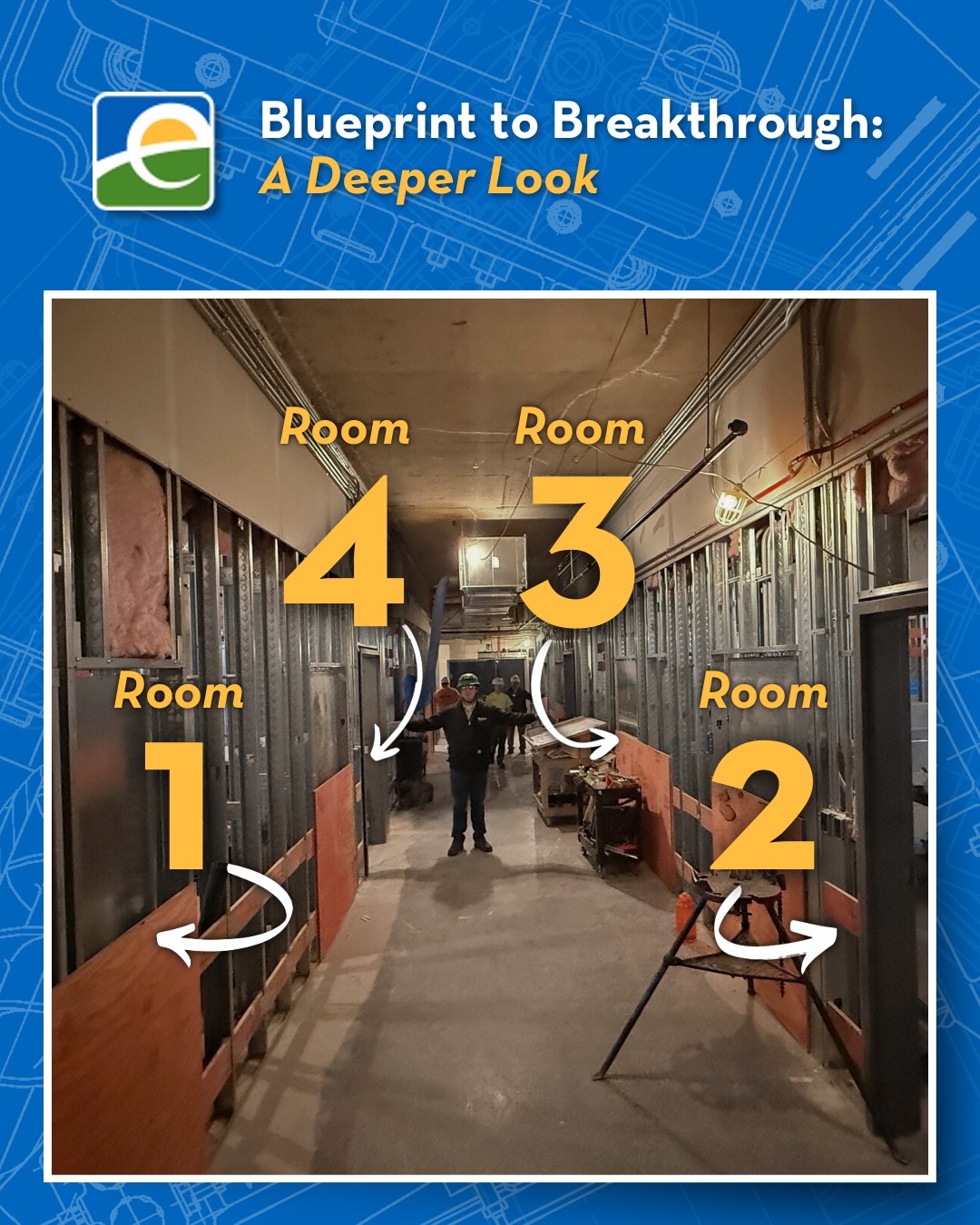
The next chapter of Blueprint to Breakthrough is taking shape inside the future cardiac operating rooms at St. Elizabeth Healthcare Edgewood, designed to support both robotic and minimally invasive heart surgery.
“These rooms are a lot bigger than what we’ve been used to,” explains Michael Morsette, Team Lead, Cardiac CSA, during a recent walkthrough. “We’ll have outlets for the robot, monitors along the walls and ceiling-mounted booms to hold the equipment we need.”
Each operating room will feature 3D 4K imaging for enhanced precision, robotic platforms and advanced minimally invasive cardiac surgery capabilities. These technologies will support procedures such as robotic minimally invasive direct coronary artery bypass (MIDCAB) and micro-thoracotomy valve repair, performed through very small incisions.
“We’ll be able to handle a wide variety of modern cardiac procedures,” he explains, “and be ready for innovations still coming down the pipeline.”
The larger footprint also supports an important part of the program’s mission.
“We bring surgeons from around the world to learn these procedures. These rooms give us the space to do that while still allowing the surgical and anesthesia teams to work comfortably.”
All four operating rooms will follow a parallel layout, allowing teams to perform complex procedures consistently across every suite.
And this is just the beginning.
More updates will come soon as the Blueprint to Breakthrough series continues.